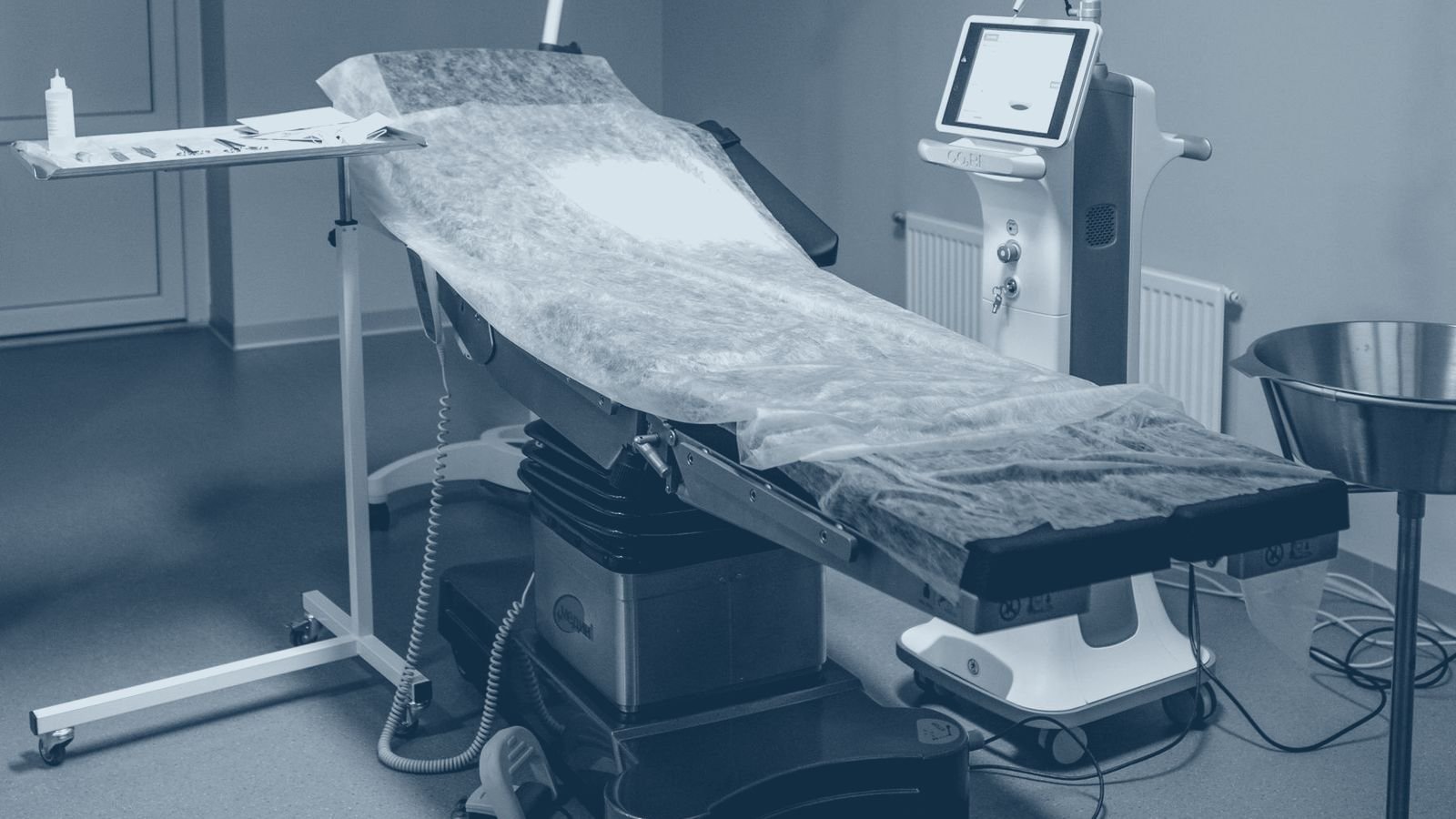
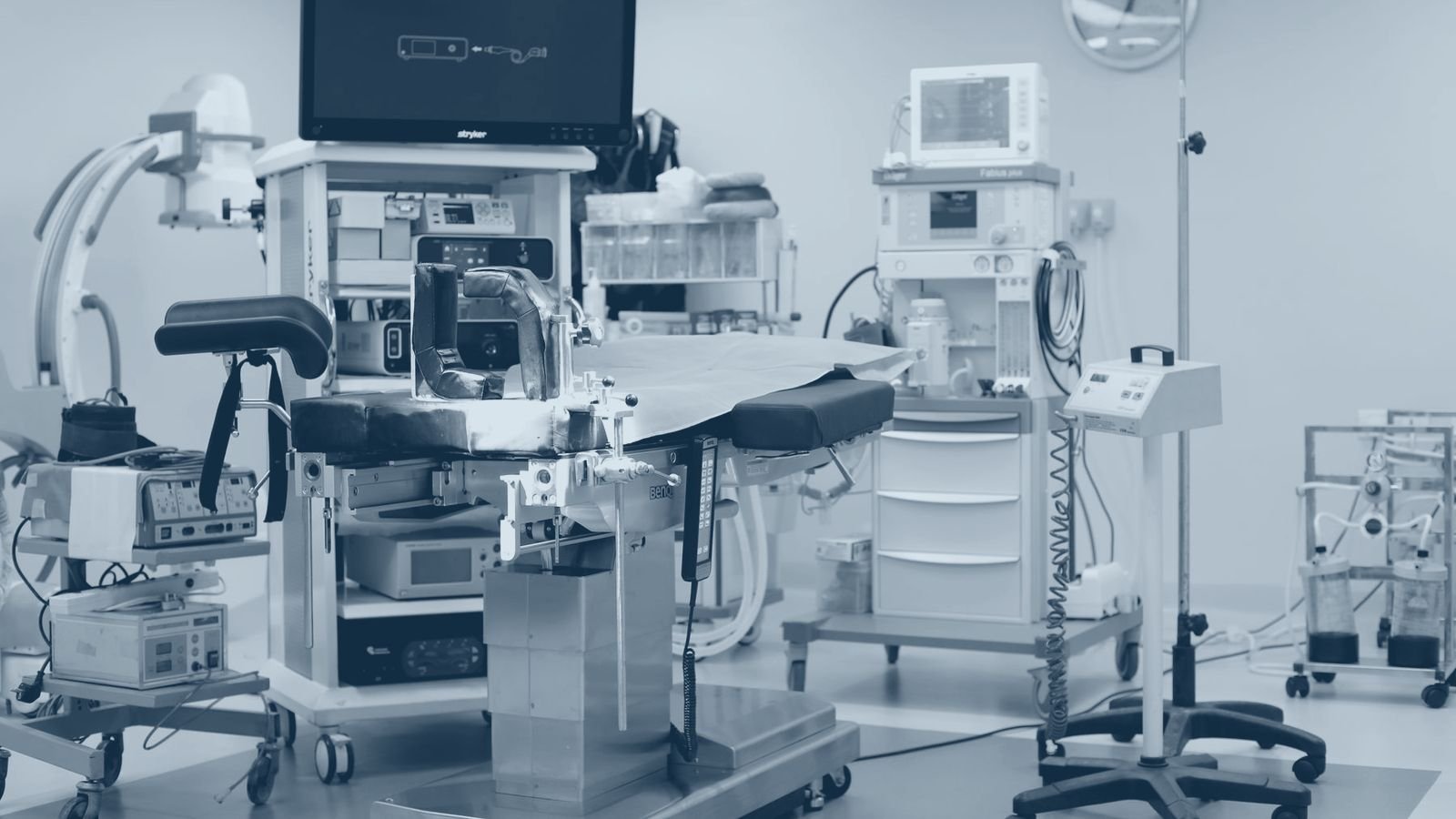
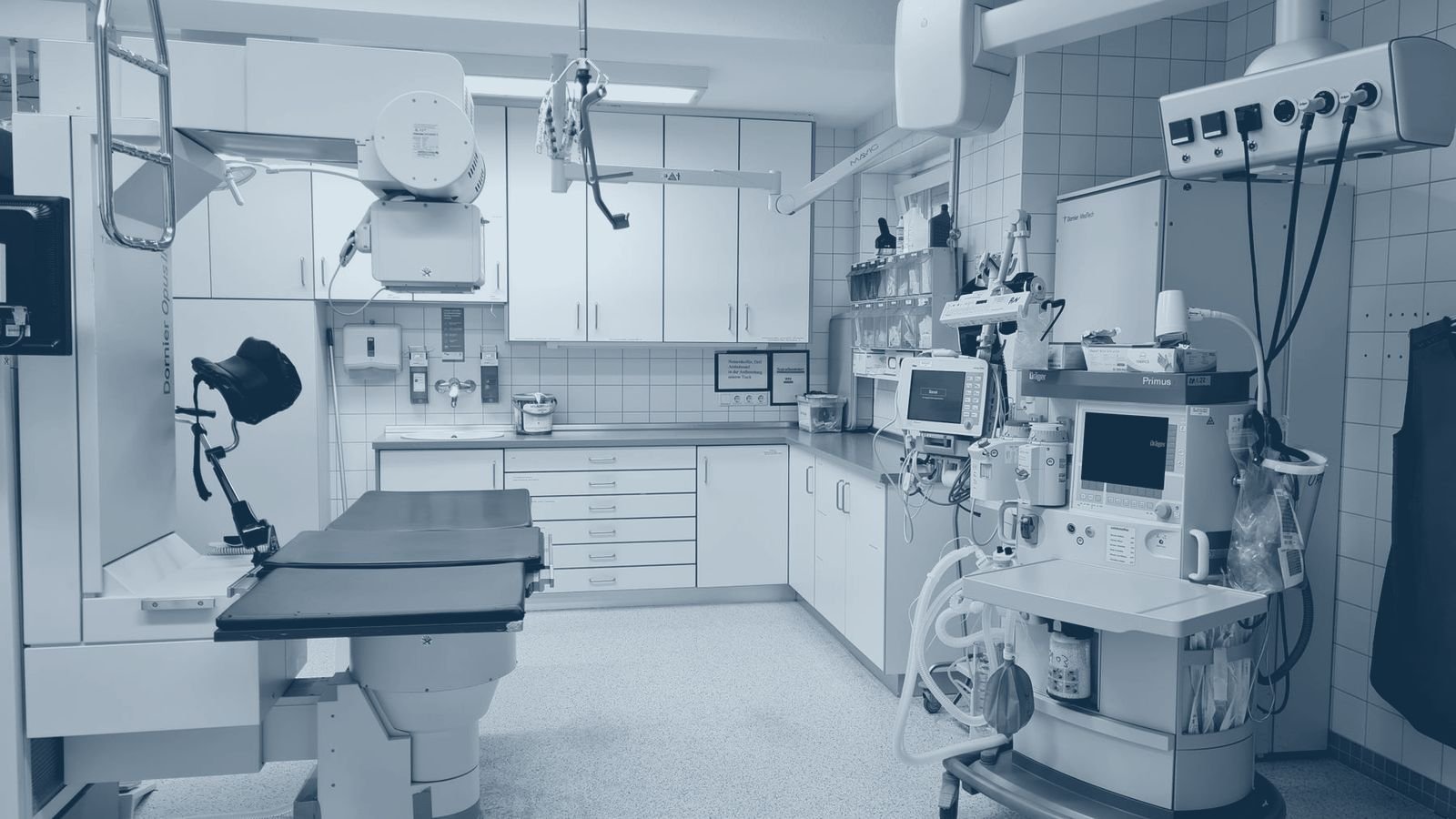
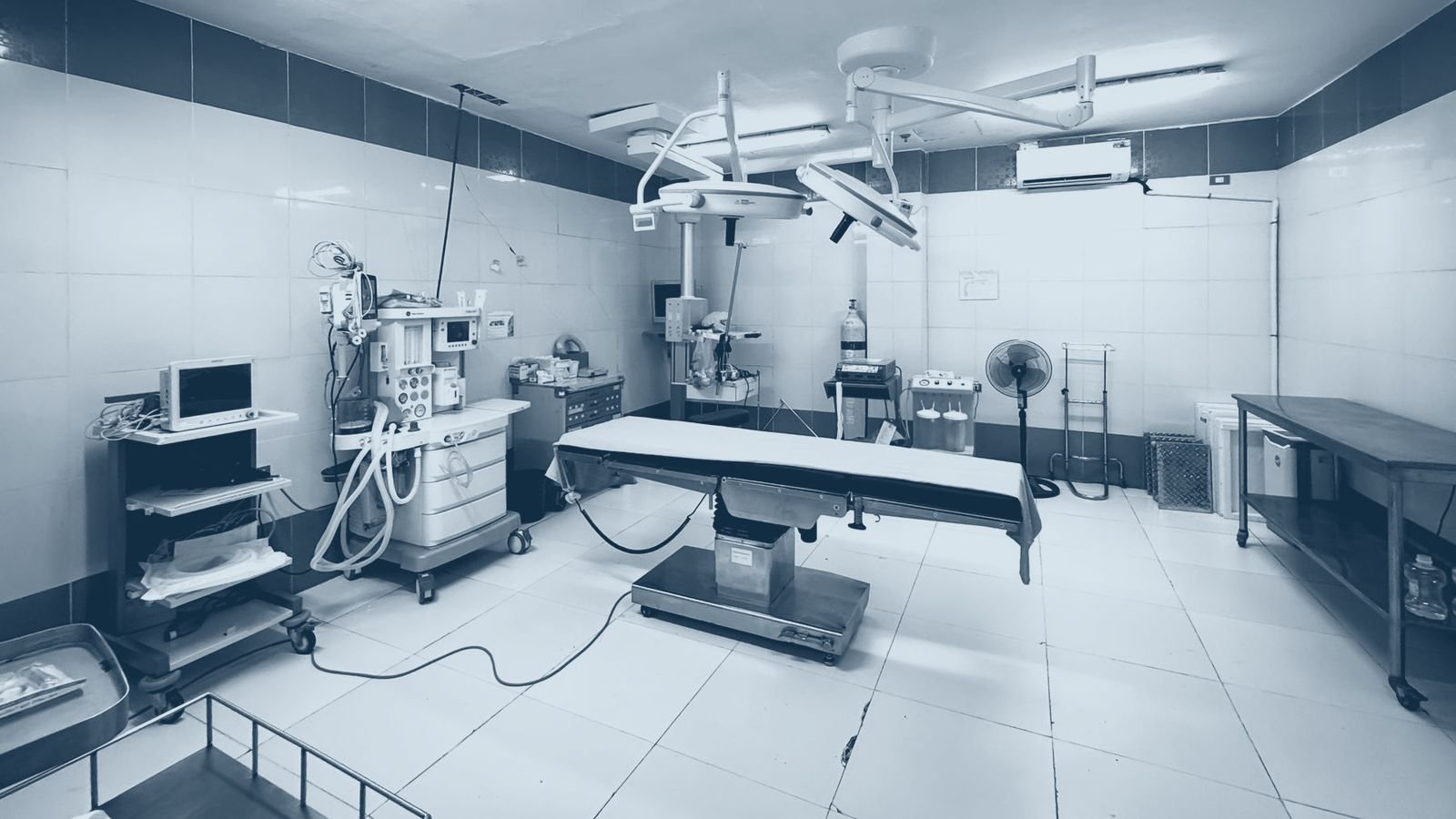
A patient safety, compliance and utility intelligence layer that sits above your BMS. Operating theatres, NICU, PICU, isolation and dialysis, monitored continuously and evidenced automatically.
In critical care the air is part of the treatment. ASHRAE 170 requires an operating room to hold 68 to 75 degrees Fahrenheit, 20 to 60 percent relative humidity, positive pressure of at least 0.01 inches water gauge and a minimum of 20 air changes per hour, and both CMS and the Joint Commission require continuous monitoring of theatre temperature and humidity. aQ HospitalOps sits above your existing BMS and scores every critical room against those limits live, so an excursion surfaces in about 60 seconds rather than at the next manual round.
Milvian works with a multi speciality hospital group running 25 branches. The pattern in every hospital is the same: the operating theatre, NICU and dialysis records that matter most to patient safety and accreditation are still handwritten, taken at intervals, and reconstructed under pressure before a survey. This page sets out what those environments actually require, what a building management system does and does not answer, and what a monitored clinical block looks like ninety days later.
Every other building type on this site loses money when a utility drifts. A hospital loses something else. In an operating theatre, a neonatal unit or an isolation room, an environmental lapse is not a comfort issue. It is an infection control event, an accreditation finding, and potentially a patient safety incident.
That changes what monitoring is for. The question is not what did this building consume last month. It is whether theatre two is safe to use for the next case, right now.
01
The most critical records are still handwritten
Operating theatre, NICU and dialysis environmental records commonly live in logbooks, filled in on rounds. A reading taken every few hours is a sample, not a record, and the gaps between samples are exactly where an excursion lives.
What it costsA logbook cannot be trended, cannot raise an alarm, and is very hard to defend when a surveyor asks what happened at 3am on a Tuesday.
02
Validation is periodic, drift is continuous
Theatre validation typically happens on a periodic schedule. Between visits, pressure differentials, air change rates and filter loading drift with no one watching. The room passes on the day it is tested and nobody can say what it did in the eleven weeks after.
What it costsCompliance becomes a snapshot taken on a good day rather than a state you can demonstrate on any day.
03
An excursion outlives the round that would catch it
The working figure we use from comparable deployments is that roughly 27 minutes of an out of band theatre humidity or pressure condition is enough to matter for infection control. Manual rounds do not run at that resolution.
What it costsThe excursion is discovered after the case rather than before it, which is the wrong side of the decision.
04
Isolation containment is defeated silently
A negative or positive pressure room holds containment only while the differential holds. A failed damper, a fouled filter or a door held open changes that, and nothing in the room announces it. The pressure gauge on the wall is only true when someone is looking at it.
What it costsContainment is either working or it is not, and without continuous logging you cannot say which it was.
05
Dialysis water is a patient safety utility
Water quality on a dialysis line is directly clinical. The ISO 23500 series requires ongoing monitoring of chemical and microbiological quality, with online monitors such as conductivity in the treatment train.
What it costsThis is the one utility in the building where a quality failure reaches the bloodstream.
06
HVAC is over half the energy and nobody can tune it safely
HVAC is around 52 percent of hospital energy use, against a median hospital energy intensity of 467 kBtu per square foot. Engineering teams know there is savings in setpoints and airflow, and will not touch them without proof that clinical conditions hold.
What it costsThe largest efficiency opportunity in the building stays frozen because the safety evidence to act on it does not exist.
Where the risk sits
Eight environments, and what goes wrong in each
Clinical environment map
Department
Why the environment is clinical
The usual failure
What aQ monitors
Operating theatres
Positive pressure, filtered supply and a held humidity band throughout every case
Drift between periodic validations, caught at the next manual round
Temperature, humidity, differential pressure, air changes, HEPA and filter status, scored into one readiness verdict
NICU
Newborns cannot regulate their own environment, so the room does it for them
Slow thermal or humidity drift that no single reading looks wrong enough to flag
Temperature, humidity, CO2, particulates, plus the critical power feeding the unit
PICU
A stable climate and uninterrupted critical power for the sickest children in the building
Power readiness assumed rather than tested; environment logged by hand
Room conditions with UPS and generator readiness on the same view
Isolation rooms
Containment exists only while the pressure differential holds
A damper, filter or propped door defeats containment with no announcement
Differential pressure per room pair, logged continuously with containment breach alerting
Dialysis
Water quality is directly patient safety critical
RO performance drifts between periodic water tests
RO health, conductivity, TDS and quality points across the treatment train
CSSD and sterile stores
A temperature, humidity and pressure cascade keeps sterilised instruments sterile
Cascade relationships assumed rather than measured room to room
Conditions per room, with the pressure relationships between them
Pharmacy and cold chain
Temperature controlled storage for medication and vaccines
Excursions discovered at the next check, after stock is already compromised
Continuous temperature per unit, with alerting and an exportable log
Central utilities
Chillers, AHUs, UPS and generators sit behind every room above
Faults found when a room drifts rather than when the plant starts to fail
Chiller and AHU performance, filter loading, critical power readiness, kWh per occupied bed
Eight environments, each with its own limits. An excursion in any of them is a patient safety event, not a comfort one.
The parameter set
Exactly what gets measured, and against what limit
These are the parameters that decide whether a room is fit for use. The targets below are the published standard values, and they differ slightly between the ASHRAE 170 basis used in the United States and the NABH aligned values commonly applied in India. Final limits are always configured to your own protocol and room class.
Critical room parameters
Parameter
Operating theatre
ICU and NICU
Isolation
How it is sensed
Temperature
20 to 24 C, that is 68 to 75 F under ASHRAE 170
22 to 26 C
22 to 26 C
Room and duct
Relative humidity
20 to 60 percent under ASHRAE 170, commonly held to 40 to 60 percent under NABH practice
40 to 60 percent
40 to 60 percent
Room
Differential pressure
Positive, at least 0.01 inches water gauge, commonly expressed as 5 Pa or more
Positive or neutral
Negative, 2.5 Pa or more for airborne containment
Room pair
Air changes per hour
20 or more total, with at least 4 outdoor under ASHRAE 170
6 or more
12 or more
Airflow calculation
Particulates, PM2.5
Under 15 micrograms per cubic metre
Under 25
Under 25
Room
CO2 and freshness
Under 800 ppm
Under 800 ppm
Under 800 ppm
Room
Filtration and HEPA status
MERV 16 minimum under ASHRAE 170, HEPA typical in practice, differential pressure in band
In band
In band
AHU sensor
ASHRAE 170 values are as published in the standard. NABH aligned values reflect common Indian practice. Milvian configures the limits your protocol specifies; we do not set clinical standards.
The gap
Your BMS is excellent at buildings and silent on patients
Almost every hospital of any size already has a building management system, and the incumbents are good at what they do. The gap is not capability. It is the question being asked.
Same sensors, different question
What a BMS answers today
What the clinical and quality teams actually ask
Is chiller AHU-2 running efficiently?
Is theatre two ready for surgery right now?
What is the fault code on this panel?
Was the NICU environment compliant for the whole of last month?
What is the building energy dashboard showing?
Is the dialysis water safe today?
Which AHU has a filter alarm?
Can we pass an accreditation survey this week, and where is the evidence?
Johnson Controls, Honeywell, Siemens and Schneider build excellent smart building automation. aQ HospitalOps does not replace it. It reads it, and translates the same points into patient safety and compliance answers.
That is why this is an integration product rather than a rip and replace one. aQ HospitalOps connects to Metasys, EcoStruxure, Desigo CC, Honeywell EBI and Forge, plus SCADA and standalone IoT sensors, over BACnet, Modbus and vendor APIs, through an on site edge gateway that buffers locally so data stays on your network.
The sensors are already installed. What is missing is the translation from building point to clinical verdict.
Watch
Aqueduct for hospitals, in three minutes
A walkthrough of how the air, water and power in a hospital become live patient safety and accreditation evidence, across theatres, neonatal and paediatric intensive care, isolation rooms and dialysis.
Three markets, three standards
What the regulator and the accreditor expect
United States
Continuous monitoring is not a best practice here, it is what the standard asks for.
ASHRAE 170 sets the numbers
Surgical suites at 68 to 75 F, 20 to 60 percent relative humidity, positive pressure of at least 0.01 inches water gauge, and at least 20 air changes per hour with 4 outdoor. Filtration at MERV 16 minimum, HEPA typical in practice.
Monitoring must be continuous and per room
CMS and the Joint Commission enforce the limits and require continuous monitoring of theatre temperature and humidity. Individual control per operating room means zone based monitoring does not demonstrate compliance.
The energy prize is large and locked
Median hospital energy intensity is 467 kBtu per square foot and HVAC is around 52 percent of it, but no engineering team will tune airflow without evidence that clinical conditions hold.
Where aQ HospitalOps lands
Hospitals that need per room continuous evidence rather than periodic validation, and want to unlock HVAC efficiency without touching clinical risk.
Dubai and the Gulf
International accreditation in a climate that makes the plant work hardest.
JCI is the regional benchmark
Gulf hospital groups compete on international accreditation, which is evidence heavy and recurring rather than one off.
Cooling defines the building
Up to 80 percent of a building's electricity demand in the UAE goes to cooling. In a hospital that plant is also holding clinical conditions, so efficiency and patient safety are the same conversation.
Ambient conditions punish drift
High ambient temperature and dust load mean filter loading and coil fouling develop faster than in temperate climates, so the interval between validations matters more.
Where aQ HospitalOps lands
Groups holding international accreditation across several sites who need one environmental standard and one evidence trail across all of them.
India
NABH and JCI evidence, plus assured ESG disclosure for listed groups.
Accreditation is evidence heavy
Air quality, ventilation and water quality are among the most evidence intensive parts of NABH accreditation, and the evidence is usually assembled retrospectively from logbooks.
Networks are growing by acquisition
Hub and spoke groups add hospitals faster than they can standardise them. An acquired unit arrives with its own logbooks, panels and thresholds.
The board question arrived too
For listed hospital groups, BRSR Core water and energy intensity metrics carry independent reasonable assurance, which turns kWh and water per occupied bed into a reportable number.
Where aQ HospitalOps lands
Multi site groups that need the same safety definition across owned, greenfield and acquired hospitals, and one source feeding NABH, JCI and BRSR.
The solution
aQ HospitalOps: the intelligence layer above your BMS
One login, every department, updating every 60 seconds. The modules below run on the sensors and panels you already have, with retrofit instrumentation added only where a measurement genuinely does not exist.
Air
aQ AirSafe
The clinical air brain, and usually where a deployment starts.
Temperature, humidity, differential pressure, air changes, PM2.5, CO2 and TVOC scored per room against its own limit
One readiness verdict per theatre rather than seven separate numbers
Isolation containment monitored as a room pair relationship, not a single gauge
Filter loading, coil performance and fan behaviour, so an AHU is serviced before the room drifts
Water
aQ WaterGuard
Dialysis and the wider water system, line by line.
Dialysis RO health, conductivity and TDS across the treatment train
Drinking water, tanks, STP and reuse volumes quantified rather than assumed
A reconciling water balance, so a leak shows up before the bill does
Water per occupied bed as a benchmarkable number across sites
Power
aQ EnergySmart
Critical power readiness and the efficiency case.
Chillers, AHUs, UPS, generators and feeders on one electrical single line
Critical power readiness tested continuously rather than assumed
kWh per occupied bed, benchmarked across hospitals in the group
HVAC tuning proposals backed by evidence that clinical conditions held
Intelligence
aQ Core and the copilot
Plain language questions, cited answers, owned actions.
Ask why theatre two humidity is high and trace it to the humidifier or the cooling coil
Every alarm becomes a prioritised risk with a recommendation and an owner
Findings framed in the language your quality team and surveyors already use
Evidence packs for a month of theatre and dialysis records assembled in seconds
Deployment
A quarter from survey to live
Start with the operating theatre and NICU block. Contained boundaries, defined air handling units, one water and power feed to reconcile, and the environment where a lapse matters most, so the value is immediate and visible to clinicians.
Phase 0 · 2 to 3 wks
Discovery
Confirm departments, room classes, thresholds, existing BMS points and the audit pain points for the block.
Phase 1 · 4 to 8 wks
Data foundation
Edge gateway, IAQ and pressure sensors, AHU points, dialysis RO and critical power connected. First live readings and alarms.
Phase 2 · 4 to 6 wks
Safety dashboards
Patient safety score, theatre and NICU readiness, infection control view and accreditation evidence packs go live.
Phase 3 · 6 to 10 wks
Copilot and workflow
Plain language copilot, predictive AHU alerts, corrective action workflow and executive briefings.
The survey is non invasive. We map what exists, flag the gaps and never interrupt patient care. Six things get assessed on the walk: the AHUs serving critical areas, pressure relationships and containment cascade, dialysis RO and water quality points, medical gas and pipeline readiness, UPS and generator readiness for life safety loads, and the existing BMS integration points alongside twelve months of bills to anchor the before and after.
The survey is non invasive. We map what exists, flag the gaps, and never interrupt patient care.
Proof
Where this has already run
Healthcare, India
A multi speciality hospital group, 25 branches
A hub and spoke network where every acquired unit arrived with its own logbooks, panels and thresholds. One environmental standard mapped across owned, greenfield and acquired hospitals, with each site's safety score visible from the corporate quality team.
Focus: one safety definition across a growing network
Children's hospital, Hyderabad
NICU, PICU and theatre environments
The most environment sensitive beds in medicine. Air, pressure, dialysis water and critical power monitored end to end across the clinical block, with accreditation evidence assembled continuously rather than before a survey.
Focus: OT and NICU readiness, NABH evidence packs
Multispecialty hospital, Guntur
Operating theatre and isolation cluster
A dedicated air side deployment across the theatre and isolation rooms, with temperature, humidity, pressure, air changes, particulates and filter status monitored live alongside the AHUs serving them.
Focus: infection control, HVAC energy baseline
Aviation, United States
A top 25 US airport, live in 72 hours
Roughly 5,000 meter points across a 24/7 campus. A 9,000 gallon per day anomaly surfaced within 72 hours of go live. A hospital is the same continuous, life critical operating profile with tighter tolerances.
5,000 meter points, 72 hours to first find
Global water stewardship
A Fortune 1 water positive programme
One real time water intelligence layer across the portfolio, with same day leak and anomaly detection and auditable data for reduce, reuse and replenish reporting.
88 facilities monitored, 75,000 m3 saved
The platform record
175 plus facilities, 19 countries
Hardware agnostic across 130 plus device types and any protocol. Enterprise grade and AWS native as an AWS Advanced Tier Services Partner, with role based access and audit logging.
2 to 6 weeks from first call to live data
Hospital names are withheld on this page where usage permission is still in progress. Reference calls can be arranged under NDA.
Outcomes
What a live hospital delivers
Safer critical care
Theatre, NICU, PICU and dialysis excursions surface in about 60 seconds, before they reach a patient rather than after the case.
Audit ready every day
Accreditation evidence assembled continuously, so a survey becomes an export rather than a scramble and a fortnight of reconstruction.
One standard, every site
The same safety definition across owned, greenfield and acquired hospitals, with newly integrated units visible against it from day one.
Fewer surprises
Predictive maintenance on AHUs, chillers, UPS and generators, so plant is serviced before a room drifts rather than after.
HVAC efficiency, safely
The largest energy load in the building becomes tunable, because there is finally evidence that clinical conditions held while you tuned it.
Board grade reporting
kWh and water per occupied bed, carbon and reuse, ready for disclosure without a year end reconstruction.
What are the ASHRAE 170 requirements for an operating room?
ASHRAE 170 requires surgical suites to maintain a temperature between 68 and 75 degrees Fahrenheit, relative humidity between 20 and 60 percent, positive pressurisation of at least 0.01 inches water gauge relative to adjacent spaces, and a minimum of 20 total air changes per hour of which at least 4 are outdoor air. Filtration must achieve MERV 16 at minimum, with HEPA typical in practice.
The standard also requires individual temperature and humidity control for each operating room, which means zone based monitoring is not sufficient to demonstrate compliance for an individual theatre.
Does the Joint Commission require continuous temperature and humidity monitoring?
Both CMS and the Joint Commission enforce the ASHRAE 170 limits and require continuous monitoring of operating room temperature and humidity when surgical suites are used for their intended purpose.
In practice that is the gap most hospitals have. Periodic rounds produce a set of samples rather than a continuous record, and a sample cannot demonstrate what the room did between readings.
Does this replace our building management system?
No. aQ HospitalOps sits above the BMS and reads it. It integrates with Metasys, EcoStruxure, Desigo CC, Honeywell EBI and Forge, plus SCADA and standalone IoT and pressure sensors, over BACnet, Modbus and vendor APIs.
The BMS keeps running the plant. aQ HospitalOps translates the same points into the question a clinical or quality team is actually asking, which is whether a specific room is fit for use right now.
Does installation interrupt patient care?
No. The survey is non invasive and maps what already exists. Where the BMS already exposes a point, it is read rather than duplicated. Retrofit sensors are added only where a measurement genuinely does not exist, and that work is scheduled around clinical activity.
An on site edge gateway reads BACnet, Modbus and SCADA and buffers locally, so data stays on your network.
Which department should be instrumented first?
Usually the operating theatre and NICU block. It has contained boundaries, a defined set of air handling units and one water and power feed to reconcile, and it is the environment where a lapse matters most, so the value is immediate and visible to clinicians.
What is learned there clones to every other theatre and neonatal unit in the group, faster each time.
How does it help with NABH or JCI accreditation?
Air quality, ventilation and water quality are among the most evidence intensive parts of accreditation, and that evidence is normally reconstructed from logbooks before a survey. Continuous monitoring produces it as a by product of running the hospital.
To be clear about the boundary: aQ HospitalOps supports readiness and produces evidence. The accreditor and your own quality team remain the authority on whether a standard is met.
What is monitored on a dialysis water system?
RO health, conductivity, TDS and quality points across the treatment train, monitored continuously rather than sampled periodically. The ISO 23500 series sets requirements for ongoing monitoring of the chemical and microbiological quality of water used to prepare dialysis fluid, and includes online monitors such as conductivity within the water treatment components.
How much energy could a hospital actually save?
HVAC is around 52 percent of hospital energy use, against a median hospital energy intensity of 467 kBtu per square foot, so it is the single largest target in the building.
The honest constraint is that in a hospital you cannot chase that saving without safety evidence. What continuous monitoring changes is not the size of the opportunity but the ability to act on it, because setpoint and airflow changes can be made with proof that clinical conditions held throughout.
How is patient data handled?
aQ HospitalOps monitors the building environment and its utilities. It measures air, water and power conditions in clinical spaces, not patients, and does not connect to clinical systems or patient records.
The platform is enterprise grade and AWS native as an AWS Advanced Tier Services Partner, with SOC 2 aligned security, role based access control and audit logging, and the on site edge gateway keeps telemetry on your network.
How long before a hospital sees the first finding?
First live readings and alarms typically arrive in the data foundation phase, four to eight weeks in, and the first environmental findings usually follow within days of that.
A full block with safety dashboards and accreditation evidence packs live takes about a quarter, because the record needs to span a representative range of clinical activity to be meaningful.
References
Sources for the figures on this page
Standards and benchmarks are third party and linked below. The 27 minute and 60 second figures are illustrative working values from comparable deployments, labelled as such wherever they appear; a site survey replaces them with your own baseline. Milvian deployment figures are our own records.
Seven research notes on the environmental conditions that decide whether a theatre is safe to use, what continuous monitoring actually requires under ASHRAE 170 and NABH, and why a BMS does not answer the question a quality team is asking.
A median energy use intensity of 467 kBtu per square foot, HVAC at 52 percent of it, and an efficiency opportunity most engineering teams cannot safely touch.
A theatre can drift out of band and recover between two logbook entries. The room passes every check and the record shows nothing, because nothing was looking.
A negative pressure room protects people only while the differential holds. Nothing in the room announces when it stops, and a wall gauge is only true while someone is reading it.
Everywhere else in the hospital, a water quality failure is an operational problem. On a dialysis line it is a clinical one, and the standard expects ongoing monitoring rather than periodic tests.
The sensors are already installed and the incumbents are good at their job. The gap is that a building management system answers a building question, and the quality team is asking a clinical one.
Air quality, ventilation and water quality are among the most evidence heavy parts of accreditation, and the evidence is normally rebuilt from logbooks in the fortnight before a survey.
8 min read
Next step
Start with one block. Prove it in a quarter.
Not the whole network on day one. One high stakes environment, usually the operating theatre and NICU block, instrumented end to end as a lighthouse every other hospital in the group can see.